Monday, December 13, 2010

Texas. LRGV part 1


Harris Hawk, north of La Joya, 'Sparrow Road'

Dickcissel: apparently a rare visitor to Santa Ana National Wildlife Refuge. Sadly, the refuge was largely closed owing to recent flooding, but I did tag along on a couple of excellent guided walks. The first was with an Audubon Socitey group down from Washington DC, who gave me some excellent help in ID of the local birds (particularly helping me with unfamiliar calls). The second was a cultural tour, on which I learned much of the history of the place, but also managed to see my only Javelina (Collared Peccary) of the trip.
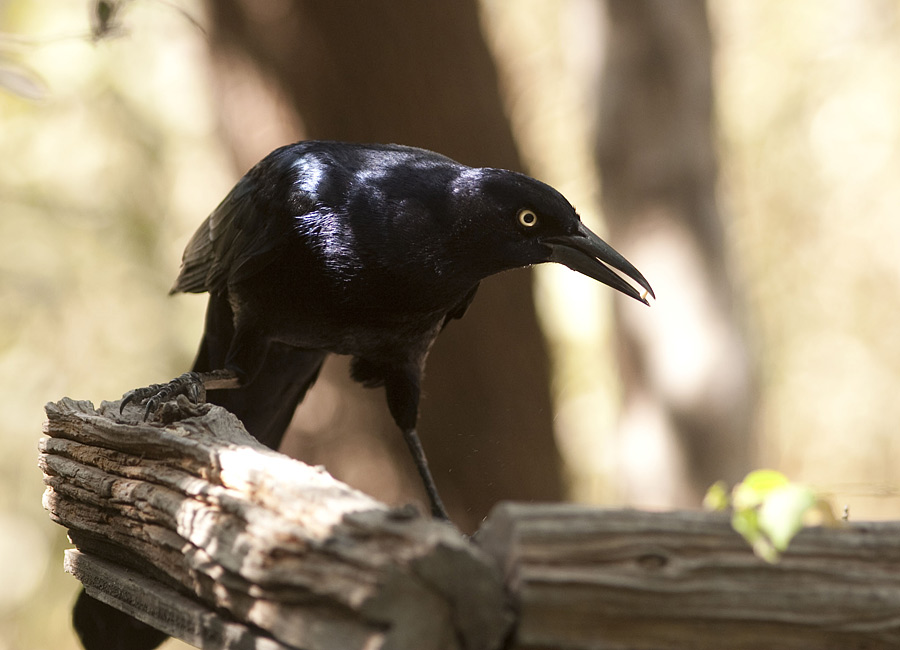
Boat-tailed Grackle: this is one the most ubiquitous birds in the Lower Rio Grande Valley, present just about anywhere and gathering in large flocks at roosting time.

Golden-fronted Woodpecker. This local speciality is common in good numbers everywhere in the LRGV. They readily come to feeders, including half-oranges.

Crested Caracara

Eastern Screech Owl. This is a regular bird in the car park of Estero Llano Grande State park and World Birding Center, near Weslaco (expect to see more photos later)

Green Jay. Another common LRGV speciality, this was the only corvid I saw in the region. The birds are particualry easy to see around feeders, and very difficult to photograph away from them!

Common Ground-dove, Estero Llano Grande, at the visitor centre feeders

Horned Lark, near Sebastian, north of Harlingen. Thre were dozens of Horned Larks in the ploughed fields, while I was searching for Mountain Plovers and Sprague's Pipits, after top American bird photographer Kevin Karlson had shown me some photos on his camera, where the piptis took up half a frame! I only ever got poor views of these birds, despite KK's attempts to help me find some.

American Snout, Santa Ana NWR

Fox Squirrel. This is one of the commonest mammals I encountered, though I was assured by all and sundry they are not native to the area.Still, a rather handsome beast.

Plain Chachalaca. I encountered most of the chachalacas I saw at heavily vegetated urban parks, where they form dense flocks, enjoying feeders.

Common Mestra

Northern Bobwhite, 'Sparrow Road' north of La Joya

Orange-crowned Warbler. The most abundant wood warbler in the region in autumn (and a pretty dull bird!), this is North America's worst-named bird

Saddlebags dragonfly. I'm not sure what species this is, but doubtless someone can help me out... This was photographed at Estero Llano Grande WBC


Common Pauraque. One of half-a-dozen or so at Estero Lanno Grande (expect more photos)

Pipevine Swallowtail. Estero Llano Grande WBC. A bit of a tatty specimen, this...


Queen. Estero Llano Grande WBC

Raccoon footprints Estero Llano Grande WBC

White-patched Skipper

Inca Dove

Common Mestra

Little Blue Heron. Estero Llano Grande WBC

Monday, November 29, 2010

Very loud cricket song

Cricket (Alamo) by Weedons World
This is a recording I made of an extraordinarily loud cricket which made a home in the skirting board of my appartment in Alamo, Texas. It was unbelievably loud. Play this at high volume on headphones and you will get an impression. Now imagine sleeping through that racket. Luckily on the fourth or fifth night of sleeplessness, after I attempted to block its hole with pillows, it climbed onto one of them for a good perch to chirp from. I was then able to carry it outside and never be troubled again. Bliss.
And this is what the noisy fellow looked like. Anyone know the species?

Sunday, November 28, 2010

Now, I'm feeling sleepy...

Back home


I am back to a very frozen Peterborough, after a very productive ten days in the Lower Rio Grande Valley, South Texas, where the weather was beautiful and warm and sunny and I felt afronted when forced to put on a fleece for the first time yesterday as a cold front passed. This digiscoped Eastern Screech Owl detail is a taster for things to come. Watch this space.

Saturday, November 13, 2010

Thursday, November 04, 2010

Ego trip

Gordon Bennett, it has taken a long time to catch up with our local Cattle Egret, this autumn. It was initially found (by Charlie Kitchin I think) on and around the Nene Washes what seems like (and probably is) months ago. I have made at least 11 trips to search for this elusive fella. But at least now it has been tied down to a consistent field (and one which I suspected it was favouring weeks ago!).
So, I borrowed the car from Jo today and took a long lunch to finally bung the egret on my year list. After a bit of fannying around, an obliging lady refound it for a few of us birders, including me and local year lister John Saunders.
Hurrah, finally a respectable 174 for the PBC year list. I still want 180 as a minimum, though...

Saturday, October 09, 2010

Stonechat on Nene Washes

Some autumn moths


Mallow


Garden Rose Tortrix

Acleris sparsana

Treble-bar

Frosted Orange
Mothing has been hopeless for weeks now, and I seriously considered stopping for the winter a few days ago, after a catch of three familiar moths. However, the weather has gone mild and interesting over the last couple of nights, so I have got the trap out again, and finally got a couple of desired autumn moths. In addition to one or two slightly unseasonally late moths, such as Treble-bar, I have added four species to the garden list (now 114) in the last couple of nights:
Garden Rose Tortrix
Acleris sparsana
Mallow and
Frosted Orange

Friday, October 08, 2010

Garden Spotted Flycatcher

This Spotted Flycatcher (in a neighbour's birch), was my second garden tick of the day (after Lesser Redpoll earlier) and a very late record (the latest ever in the Peterborough area). Hence, I don't feel too bad about publishing such basic photos...


Tuesday, October 05, 2010

Sunday, October 03, 2010

Nutty Great Spotted Woodpecker


While I was emptying the moth trap this morning, in the garden, I heard a kick from a Great Spotted Woodpecker and looked up to see it in one of next door's trees. Then it flew off and I thought it was a goner. A few minutes later I heard tapping from the end of the garden, and the Great Spot (the red patch on the nape shows its a male) was up to the classic trick of getting a hazelnut (from one of our hazels), wedging it into a crevice in a little apple tree (always the same tree, we use to hang feeders from) and bashing hell out of it to extract the nutty goodness.
Luckily it did this long enough for me to pop inside for my digiscoping kit. It was too dark and rainy for stills, but I did manage this sequence of videos. Note the bit at the end when the pecker shuffled up the tree and an opportunist Great Tit came for the spoils...